Ghee vs Butter: What's the difference and which should you use?
I used to reach out for butter automatically, not even thinking about it. It was what I grew up with, what most recipes called for. It felt familiar. But once I started cooking more intentionally, especially at higher heat, the ghee vs butter debate surfaced and I realized they both behave very differently in the pan.
They look almost the same and both come from milk. Both add richness. Once they start melting though, this is where you start seeing the differences in action.
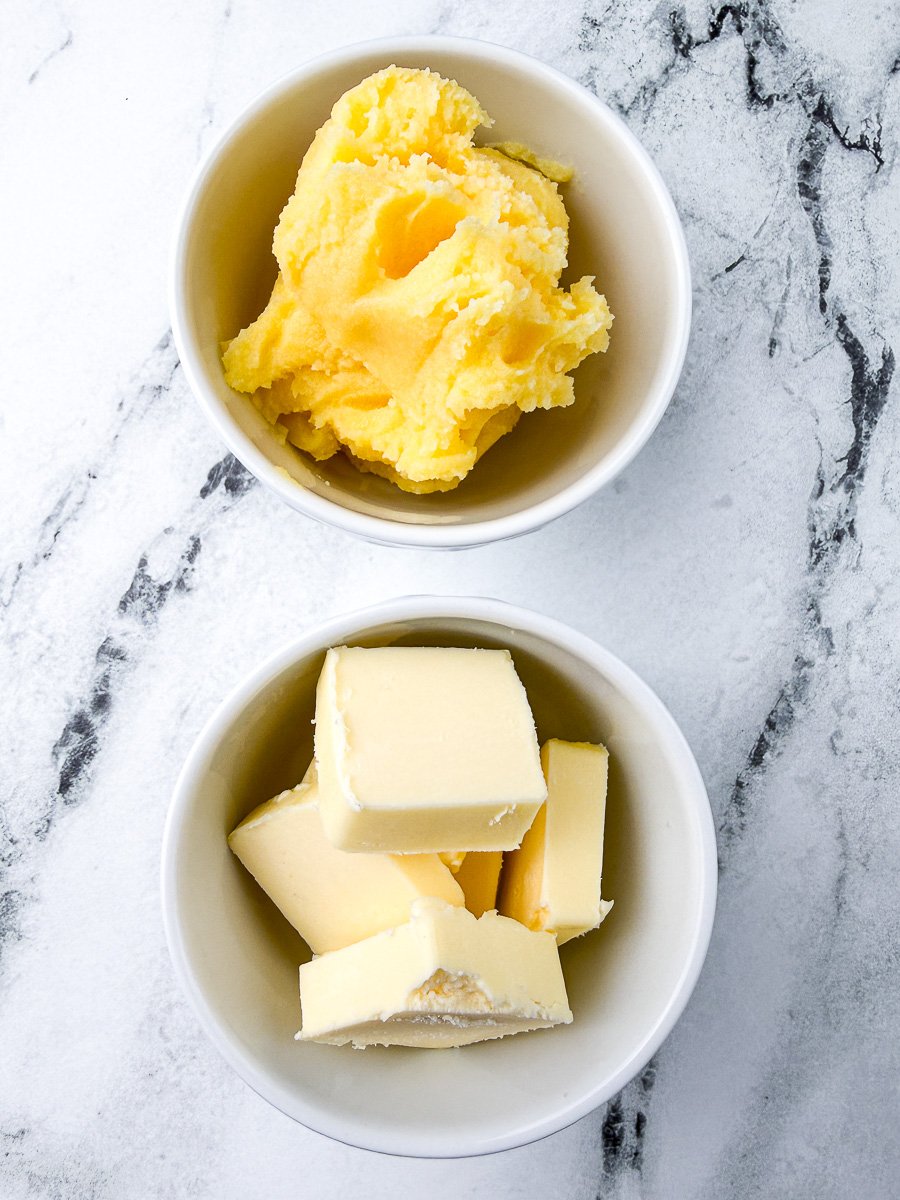
In this guide, I am breaking down exactly how ghee and butter compare. Smoke point, flavor, how they perform in everyday cooking - so you can confidently decide which one is best in your kitchen.
Jump to:
Ghee vs butter comparison
| Feature | Ghee | Butter |
|---|---|---|
| Smoke Point | ~450°F | ~350°F |
| Contains Milk Solids | No | Yes |
| Flavor | Nutty, toasted | Creamy, milky |
| Shelf Stable | Yes | No |
| Best For | High heat cooking | Baking, spreading |
| Storage | Room temperature | Refrigerated |
What is butter?
Most people have heard of butter and likely cooked with it, but here are a few distinguishing points:
- Butter is made by churning whole milk or cream
- Contains water + milk solids + fat
- Typically produced from cow's milk, though it can come from other animals as well
- Has a creamy flavor
- Has a lower smoke point
What is ghee?
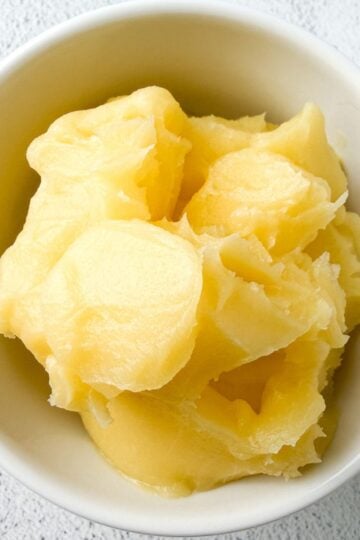
Ghee is a clarified butter which is traditionally made by simmering the butter on low heat until the water from it evaporates.
- Milk solids are removed from ghee
- Contains only butterfat
- Higher heat stability
- Deeper flavor
- Shelf-stable for months
For more details about ghee, I have a full What is Ghee guide here.
Smoke point comparison
When used for cooking, the biggest difference between ghee vs butter is their smoke point and how one behaves differently in a hot pan than the other.
Butter smoke point
Butter foams when it melts in a hot pan because it contains both water and milk solids. If left in a hot pan for even a short time, it starts foaming and browning. This can produce a burnt butter flavor.
If using butter for searing, sautéing or frying for that buttery flavor (which I do not recommend), it is best if you add oil in the pan first, like avocado oil, and then add a bit of butter. Without the oil, the butter will just burn. I would also use a lower heat if using butter.
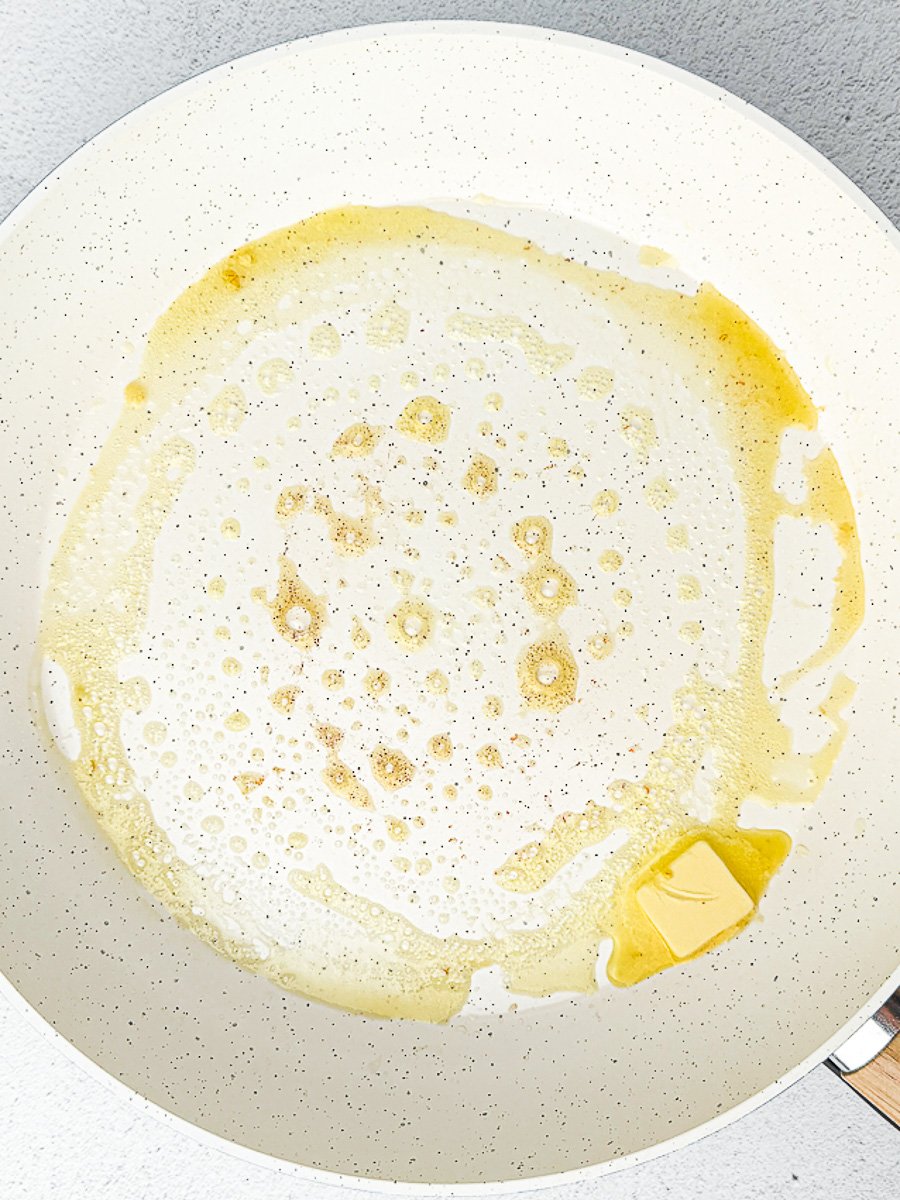
I've had instances where I had to completely rinse the pan and start all over with just oil because the butter was burnt and it was adding a burnt butter flavor I don't like.
Ghee smoke point
Ghee on the other hand, behaves very differently in a hot pan. It melts clear and clean, without the burnt flavor. It is not foaming like butter does because it is missing the water and milk solids present in butter. This makes ghee perfect for searing, sautéing, and frying.
I was skeptical when I first decided to give ghee a try, because I thought it's similar to butter. Little did I know at that time that it is very different than butter and its higher smoke point is its main advantage when cooking at high heat in a skillet.
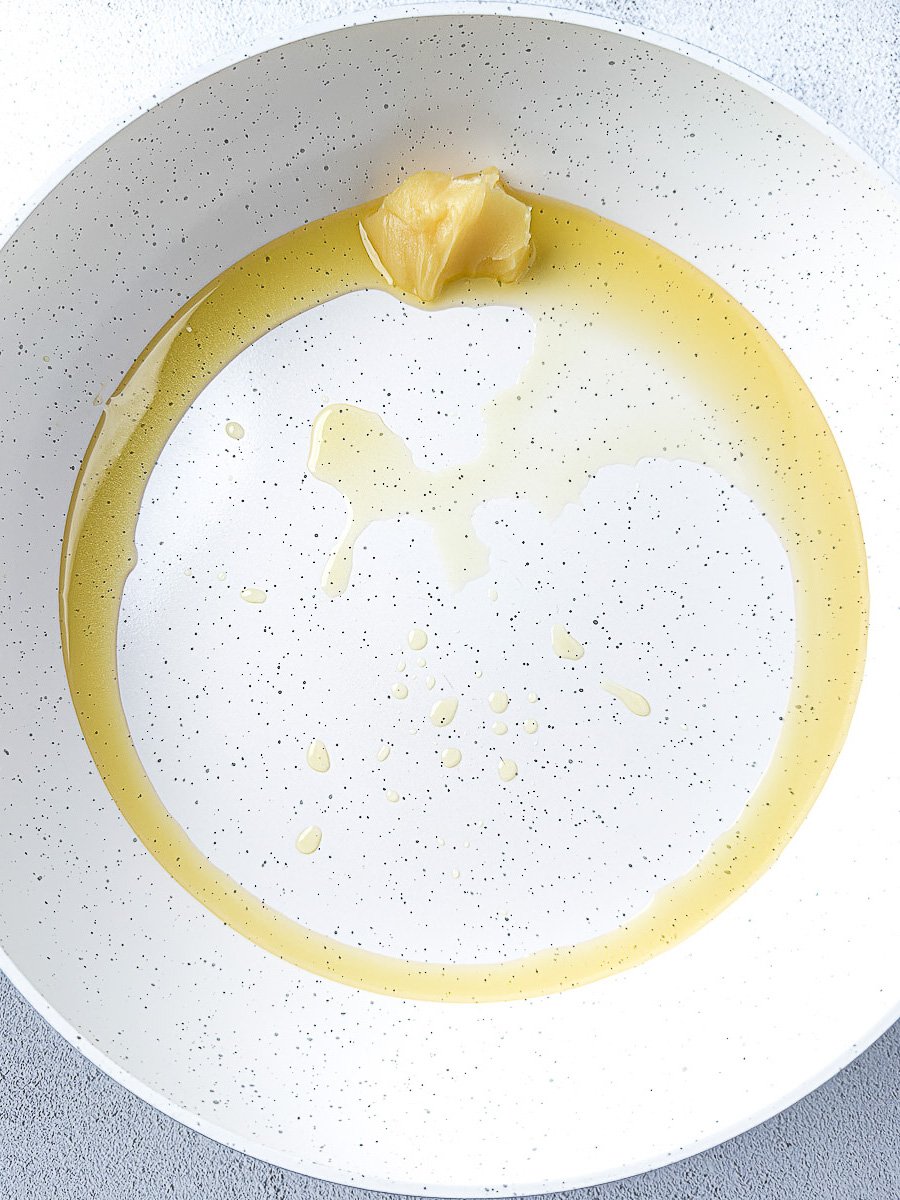
The most important tip that I have for using ghee though is to add it in the pan when the pan is not very hot yet. I have noticed through multiple tries that it behaves a lot better when you add it to a warm pan instead of hot: it starts melting slowly, preparing the "grounds" for the searing or frying you plan to do. If you add it into a very hot pan, I've noticed it tends to smoke a bit, although not really burning.
Flavor comparison
Butter typically tastes:
- creamy rich
- milky, distinctly fatty
- savory
- fresh dairy flavor
Ghee tastes:
- nutty
- slightly toasted
- more intense flavor
- rich and oily
When I use ghee vs when I use butter
Even though ghee and butter come from the same source, I don't treat them as two interchangeable products in my kitchen. Choosing the right one can really change how a dish turns out.
Here's how I personally decide which one to use.
When I use ghee
I reach out for ghee whenever I am planning to cook at higher heat or when I want a deeper, slightly nutty flavor.
Ghee doesn't burn like butter does, allowing the ingredients to turn a nice golden brown color without turning bitter.
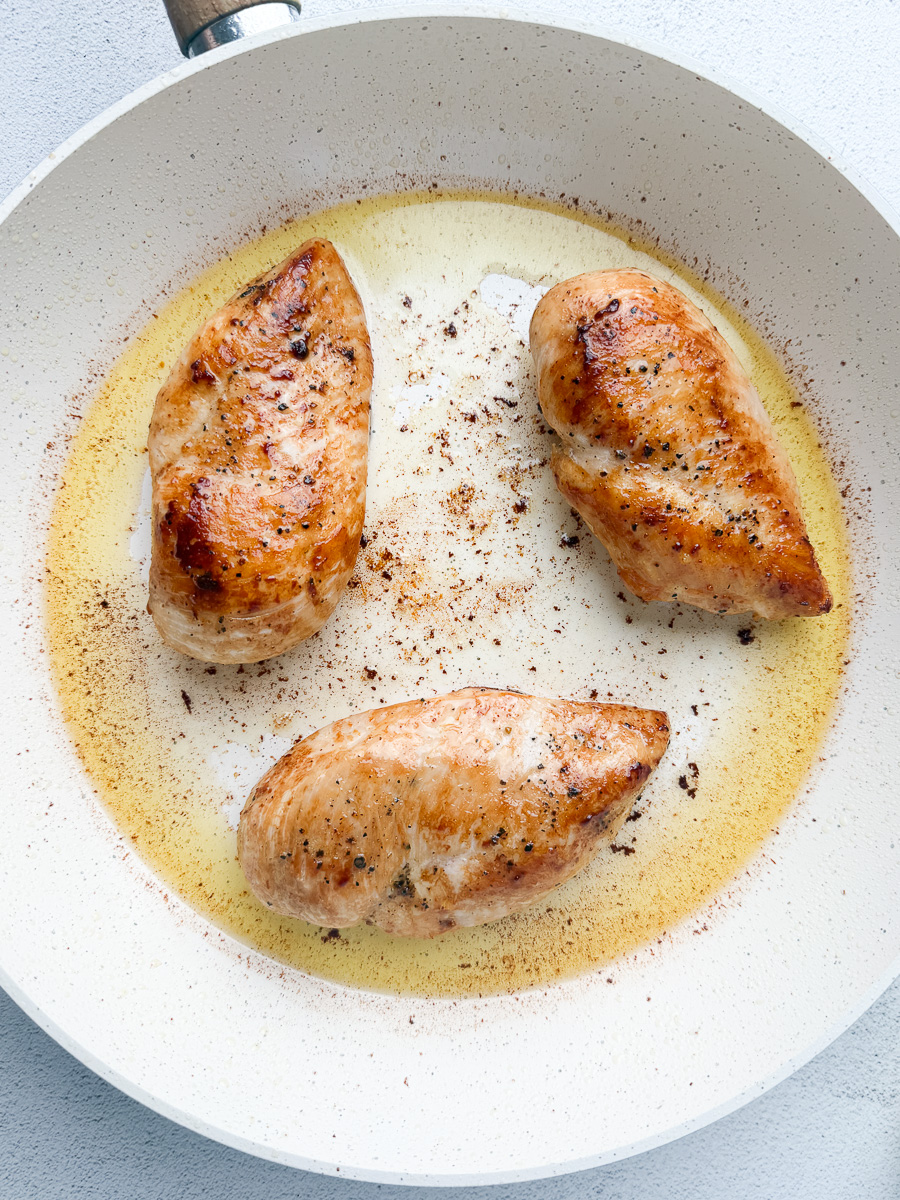
Some of my favorite ways to cook with ghee are:
- Searing chicken breast - so the outside becomes golden while the inside stays juicy
- Sautéing vegetables like green beans, zucchini, mushrooms, or broccoli
- Frying eggs when I want crispy whites edges that have a richer flavor
- Roasting vegetables like potatoes, carrots, cauliflower
- Cooking simple rice recipes where a spoonful of ghee adds richness
I absolutely love the warm, lightly toasted aroma of ghee that enhances simple ingredients when cooking.
If I'm cooking something quickly in a hot pan, ghee is almost always my choice.
When I use butter
Butter has a completely different role in my kitchen. I tend to reach for it when I want that classic creamy, dairy flavor.
Butter browns very well at lower temperatures, creating that rich, browned butter flavor.
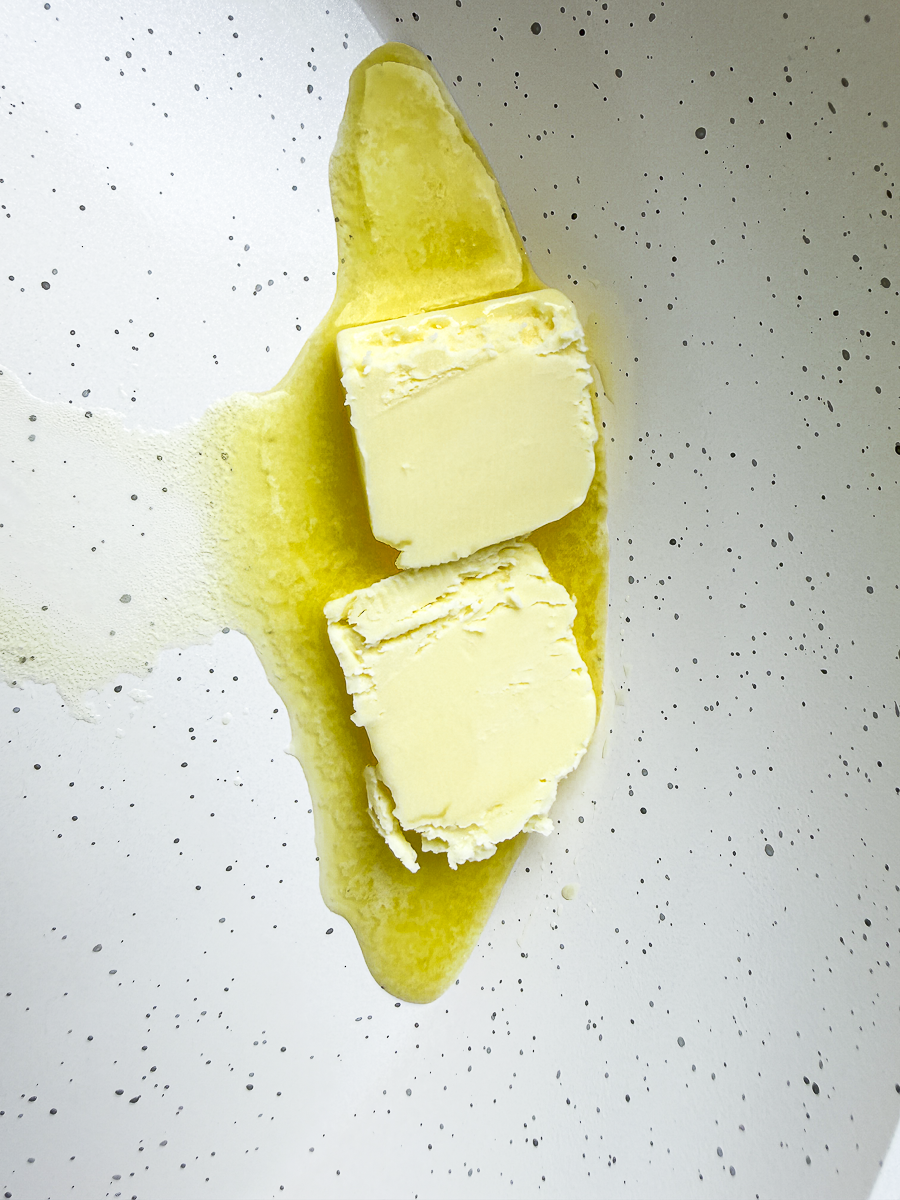
Here are the most common times I reach for butter:
- When baking - butter adds structure and flavor to cakes, cookies, pastries, or pies
- For finishing sauces or pasta dishes
- Spreading on toast or warm bread
- Cooking delicate foods at moderate heat, like my Creamy tuscan chicken recipe.
- Making browned butter for sauces or desserts
Butter has that softer, creamier flavor compared to ghee, which is why it works so well in baked dishes.
Both butter and ghee are staples in my kitchen, but they serve very different purposes.
| I use ghee for | I use butter for |
|---|---|
| High-heat cooking | Baking |
| Searing proteins | Spreading on bread |
| Sautéing vegetables | Brown butter sauces |
| Roasting vegetables | Pastries and desserts |
Can you substitute ghee for butter?
Ghee can be used instead of butter in many cases. Because ghee is pure butterfat, it works very well for sautéing, roasting, and pan-searing. It melts smoothly, doesn't burn on high heat, gives food a slightly nutty flavor.
However, baking can be a bit different if you want to substitute. Since butter contains a small amount of water and milk solids, using it for baking provides the specific buttery flavor and texture many love. Since ghee is only fat, using it for baking may slightly change the end result.
As a rule of thumb in my kitchen, for everyday cooking on stovetop, on higher heat, I typically swap the butter for ghee without any issues. For baking and spreading - I prefer keeping the butter.
How to store ghee vs butter
Butter needs to be kept in the refrigerator because it is prone to spoilage. It stays fresh for several weeks when refrigerated and can also be frozen for longer storage time.
Ghee, on the other hand, is shelf-stable. Because the milk solids and water have been removed during the clarification process, ghee can be stored in an airtight container at room temperature for several months. I usually keep my jar in a cool, dry place, like the kitchen pantry.
For longer storage, ghee can also be refrigerated, though it will become firmer when cold.
Final thoughts: should you use ghee or butter?
When it comes to ghee vs butter, the truth is that both have a place in the kitchen. They start from the same ingredient but behave very differently once heat is involved.
If you're cooking at high temperatures and want clean browning without the risk of burning, ghee is often the better choice.
On the other hand, butter shines when you want that classic creamy flavor. It works amazingly well in baking, sauces, and dishes where richness and texture are just as important as cooking performance.
In my kitchen, I keep both on hand and choose between them depending on what I'm cooking. Understanding how each one behaves helps you use it more intentionally.
FAQ
No. Ghee has a slightly deeper and nuttier flavor compared to butter. During the process of making ghee, the milk solids are gently toasted before being removed, which gives it a warm aroma.
Ghee works very well for most stovetop cooking, especially sautéing, frying, and roasting. However, butter is usually better for baking because it contains water and milk solids that help create the texture many baked goods rely on.
Butter burns faster because it contains milk solids and water. When it gets heated, those milk solids begin to brown and can eventually burn if the heat is too high. Ghee doesn't have those solids as they were removed during ghee preparation, which allows it to tolerate higher heat.
No, ghee does not need to be refrigerated if it is stored properly. Ghee is shelf-stable and can be kept in a sealed container at room temperature for several months.
Many people prefer cooking with ghee because it has a higher smoke point than butter, and a rich, nutty flavor. Also, during ghee making process the casein
Yes, ghee is effectively lactose-free and casein-free as the clarification process removed almost all milk solids (lactose and casein).